

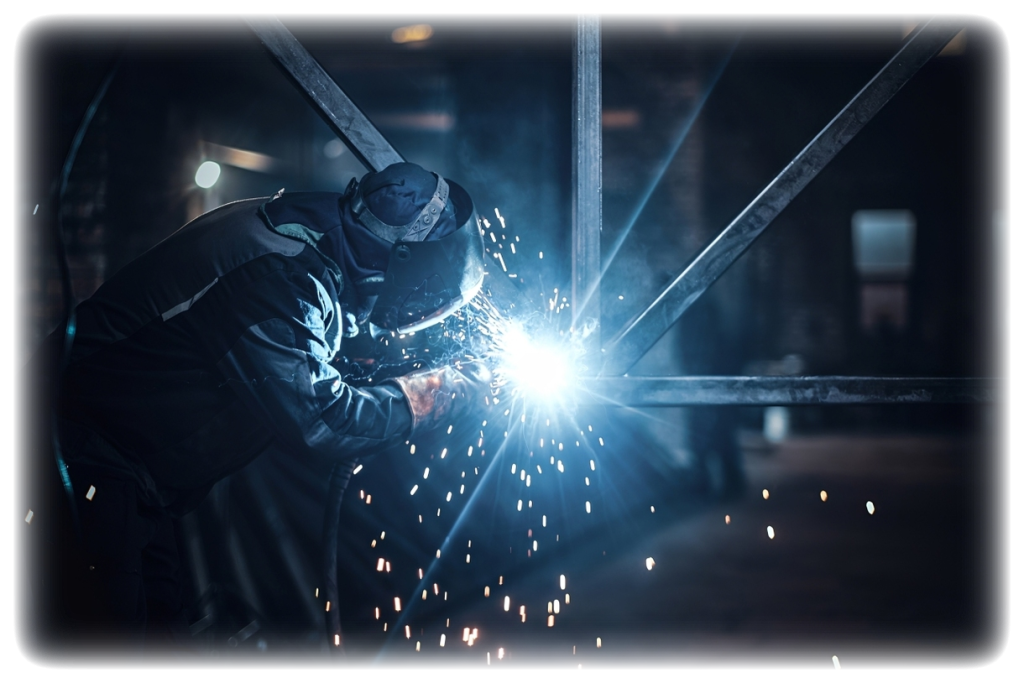
Stainless steel welding is the process of joining stainless steel components using heat (and sometimes pressure) while preserving the material’s corrosion resistance and strength. We can weld all grades of stainless steel. Stainless steel is another material that will not tolerate any atmospheric contamination in the weld puddle. It will display a black crusty build-up in the areas affected. Most of the stainless steel welding handled at Blitz Stainless Steel Worx is for the food or furniture industry, for industrial applications, for the boating fraternity, for coastal use, or for private decorative purposes.
Welding Methods
- GTAW/TIG (Gas Tungsten Arc Welding)
- Produces high-quality, precise welds.
- Commonly used for thin stainless steel and critical applications.
- Uses a non-consumable tungsten electrode and shielding gas (typically argon).
- GMAW/MIG (Gas Metal Arc Welding)
- Faster and easier to learn than TIG.
- Suitable for production work and thicker materials.
- Uses a continuously fed wire electrode.
- Stick Welding (SMAW)
- Portable and useful outdoors.
- Common for repair and construction work.
- Uses coated consumable electrodes designed for stainless steel.
- Flux-Cored Arc Welding (FCAW)
- High deposition rates.
- Often used in industrial fabrication and heavy sections.

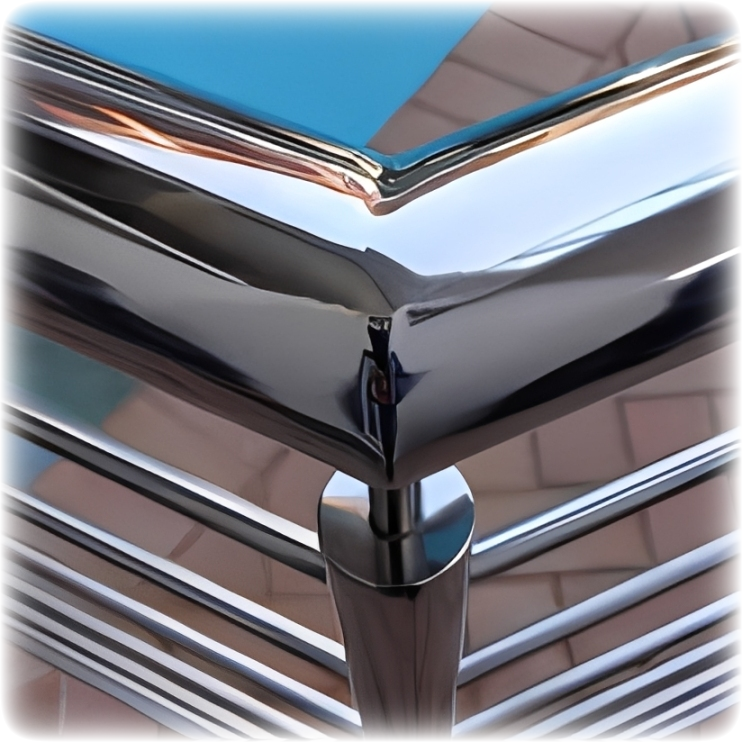

Stainless steel roll forming is a continuous metal forming process in which stainless steel strip or coil is passed through a series of rollers that gradually bend it into a desired cross-sectional shape without significantly changing its thickness.
How the Process Works
- Stainless steel coil is loaded onto an uncoiler.
- The strip is fed into a roll forming line.
- Multiple sets of forming rolls progressively shape the material.
- Additional operations such as punching, embossing, welding, or cutting may be performed inline.
- Finished profiles are cut to length and inspected.
Titanium welding
Requires much stricter control than stainless steel welding because titanium reacts readily with oxygen, nitrogen, and hydrogen at elevated temperatures. Proper shielding is critical to maintain strength, corrosion resistance, and ductility.
Titanium Welding Processes
1. TIG (GTAW) — Most Common
- Preferred process for most titanium fabrication.
- Produces high-quality, clean welds.
- Uses a non-consumable tungsten electrode and high-purity argon shielding gas.
2. MIG (GMAW)
- Used for thicker sections and higher production rates.
- Less common than TIG for critical titanium work.
- Requires excellent shielding practices.
3. Plasma Arc Welding (PAW)
- Similar to TIG but with a more concentrated arc.
- Used in aerospace and precision applications.
4. Electron Beam and Laser Welding
Used for high-performance applications.

Aluminium welding
is the process of joining aluminum alloys using heat and filler metal. It is widely used because aluminum is lightweight, corrosion-resistant, and has a high strength-to-weight ratio. However, it presents unique challenges compared to steel and stainless steel.
Aluminium Welding Processes
1. TIG (GTAW)
- Produces high-quality, clean welds.
- Ideal for thin materials and precision work.
- Commonly uses AC current to help remove the aluminum oxide layer.
2. MIG (GMAW)
- Faster than TIG.
- Preferred for thicker sections and production work.
- Often uses a spool gun or push-pull wire feeder to improve wire feeding.
3. Friction Stir Welding (FSW)
- A solid-state joining process.
- Produces excellent mechanical properties with minimal distortion.
- Widely used in aerospace, rail, and marine applications.
4. Laser Welding
Used in automotive and advanced manufacturing applications.
OTHER WELDING AND BRAZING
Besides the above welding processes, we can also offer brazing services on curtain metals. We can braze mild steel, copper, brass, tungsten. We can achieve this in most cases with the TIG welding process or with Oxy-acetylene.


Our Experience Team